
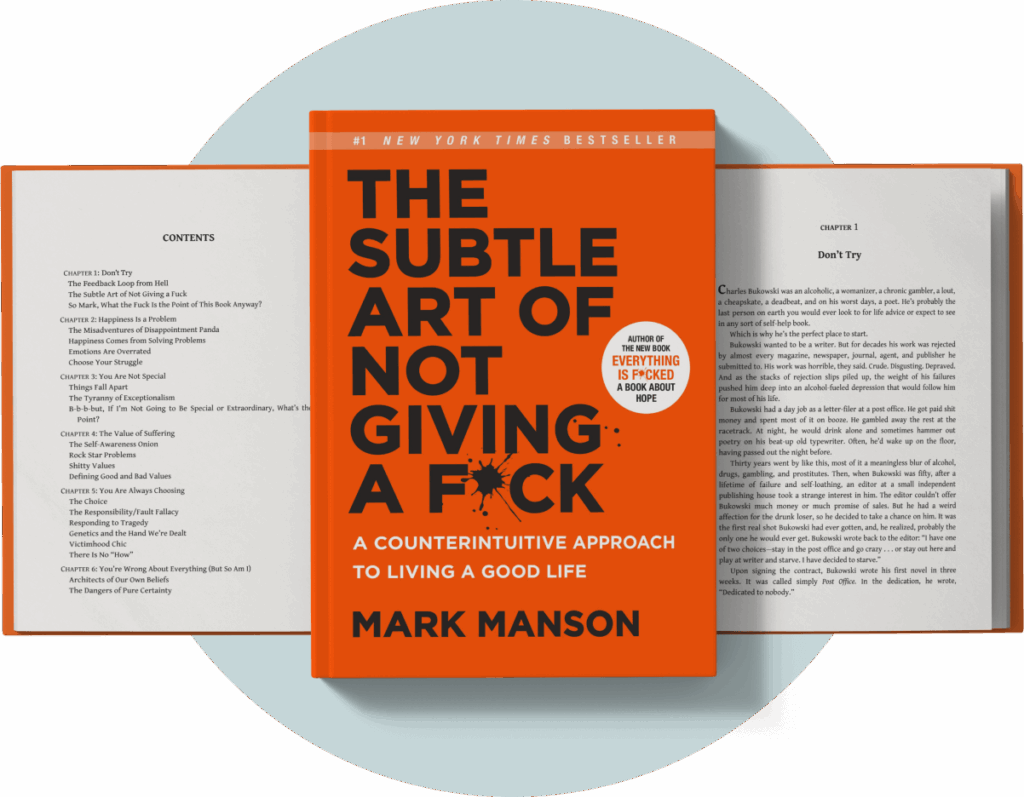
Mark Manson’s The Subtle Art of Not Giving a Fck* has impacted millions because it challenges the typical self-help narrative. While most books promise happiness through constant positivity or endless striving, Manson flips the script. He teaches that life is limited, pain is inevitable, and choosing what to care about is essential.
Many readers misunderstand this. Not giving a fck isn’t about being lazy, cynical, or reckless. It’s about choosing priorities consciously and spending emotional energy on what truly matters. Life is finite, and every fck given comes at a cost. Trivial concerns drain focus from meaningful pursuits.
This guide dives deep into each chapter, highlighting key lessons, misconceptions, and actionable takeaways, so readers can apply Manson’s principles to real life.
Chapter 1: Don’t Try — The Feedback Loop of Life
Manson begins with a shocking statement: “Don’t Try.” At first glance, it sounds like giving up, but the meaning is deeper. It’s about avoiding the trap of seeking constant validation or chasing superficial success.
The “Feedback Loop of Life” explains that caring too much about trivial things generates stress, anxiety, and dissatisfaction. People obsess over minor failures, social approval, or perfection, creating a cycle of negative emotions.
Real-world example: Social media users often obsess over likes and followers. This constant need for approval fuels anxiety and comparison. Choosing not to obsess allows focus on genuine growth, skills, and relationships.
Exercise: Identify one area of life where you are trying too hard for approval. Ask yourself: “Is this worth my energy?”
Key lesson: Focus on problems and goals that truly matter. Happiness and self-respect come from choosing worthy challenges.
Chapter 2: Happiness Is a Problem
This chapter challenges the traditional idea that happiness is the ultimate goal. Life is inherently difficult, full of challenges, and pain is unavoidable. Avoiding discomfort creates shallow satisfaction.
Manson’s point: choose problems worth solving. True happiness is not feeling good all the time. It is feeling fulfilled through growth and contribution.
Example: Learning a musical instrument is frustrating. Mistakes, slow progress, and discipline are unavoidable. Yet, the sense of mastery brings deep satisfaction that easy comfort cannot provide.
Reflection: Make a list of problems you are willing to solve, even if they are difficult. Focusing on meaningful problems builds resilience and purpose.
Key lesson: Embrace challenges. Life is not about avoiding pain but about choosing the right struggles.
Chapter 3: You Are Not Special
Many readers resist this message in a culture that celebrates exceptionalism. Manson’s blunt truth is liberating: no one is immune to failure, mediocrity, or limits. Accepting this frees energy to focus on areas where real impact is possible.
Example: Comparing yourself to billionaires or influencers is useless. Their contexts are different. Your value comes from meaningful contribution in your own sphere, not society’s unrealistic standards.
Practical tip: Write down areas where you have unrealistic expectations of being “special.” Reflect on whether energy could be better spent improving skills or relationships.
Key lesson: Accept limitations. Real freedom comes from focusing on what can be influenced, not chasing impossible ideals.
Chapter 4: The Value of Suffering
Pain is unavoidable, and Manson emphasizes choosing struggles wisely. People often try to avoid discomfort, but growth only happens through meaningful suffering. Not all struggles are valuable, so intentional selection is key.
Example: Parenting or career challenges involve constant effort, mistakes, and emotional strain. Those willing to endure these struggles gain growth, confidence, and fulfillment. Avoiding small pains for comfort often leads to regret later.
Reflection exercise: List current struggles and assess which are meaningful versus trivial. Double down on what grows your skills, relationships, or character.
Key lesson: Life is about choosing problems worth suffering for. This is the essence of personal growth.
Chapter 5: You Are Always Choosing
Every reaction, decision, and emotional response is a choice. Blaming circumstances, upbringing, or society is easy but unproductive. Ownership empowers.
Example: Someone stuck in a toxic job may complain endlessly. But they can choose to change perspective, improve skills, negotiate for better conditions, or leave. Choices, not circumstances, shape life.
Practical tip: Daily, ask: “What choices am I making? Are these serving me or draining me?” Journaling decisions can increase awareness and intentional living.
Key lesson: Responsibility and ownership are liberating. Conscious choices allow control over life direction.
Chapter 6: You’re Wrong About Everything
Manson challenges certainty. People cling to beliefs for comfort, leading to rigidity and stagnation. Growth requires humility, curiosity, and willingness to change.
Example: Believing you know the right answer limits learning. By questioning assumptions, seeking feedback, and adapting, you open doors to new opportunities.
Reflection: Identify one belief you hold without questioning. Explore alternative perspectives and reflect on what you might learn.
Key lesson: Being wrong is an opportunity. Question assumptions for clarity, growth, and better decision-making.
Chapter 7: Failure Is the Way Forward
Failure is not an enemy but a teacher. Many avoid failure, missing lessons and growth. Embracing failure builds resilience and insight.
Example: Entrepreneurs face rejection, financial setbacks, and mistakes. Each failure provides clarity, teaches problem-solving, and strengthens character.
Exercise: Reflect on a past failure. List three lessons learned that shaped your decisions or mindset.
Key lesson: Embrace small, meaningful failures. They guide growth and reveal personal priorities.
Chapter 8: The Importance of Saying No
Boundaries protect focus and energy. People fear saying no, worrying about judgment or guilt. Manson emphasizes saying no to trivial demands to focus on meaningful priorities.
Example: Declining unnecessary social events preserves time for skill-building, relationships, or self-care. Saying yes indiscriminately leads to stress and burnout.
Practical tip: Identify one area where saying no could protect your mental and emotional energy. Try it this week.
Key lesson: Saying no is essential. Boundaries allow attention to flow to what truly matters.
Chapter 9: And Then You Die
Confronting mortality is uncomfortable but clarifying. Awareness of death sharpens priorities and motivates purposeful living. Many waste life on trivial concerns because they forget life is finite.
Example: Thinking about legacy may motivate meaningful conversations, improved relationships, or more intentional daily decisions.
Exercise: Reflect on one long-term goal or value that would matter at the end of life. Align daily actions to serve that value.
Key lesson: Mortality awareness creates urgency and clarity. Life should focus on what truly matters.
Practical Daily Application of the Subtle Art
- Prioritize Meaningful Problems: Focus on issues aligned with your values.
- Practice Saying No: Protect your energy for top priorities.
- Reflect on Failures: Learn from mistakes and adjust strategy.
- Challenge Assumptions: Question beliefs that limit perspective.
- Embrace Mortality Awareness: Use finite time wisely.
- Accept Limitations: Stop chasing impossible ideals.
- Focus on What You Control: Let go of external validation and trivial concerns.
These actions turn the book’s lessons into lived experiences, transforming abstract wisdom into practical results.
Deeper Reflections
- Life is finite. Every f*ck given has a cost.
- Challenges and failure are not obstacles but teachers.
- Freedom is not about laziness; it’s intentional focus.
- Boundaries are essential for mental, emotional, and physical health.
- Happiness comes from solving meaningful problems, not avoiding pain.
Manson’s blunt style cuts through endless self-help clichés. Applying the lessons requires reflection, courage, and discipline, not superficial rebellion.
Conclusion
The Subtle Art of Not Giving a Fck* teaches clarity, focus, and purpose. Life is messy, energy is limited, and not everything deserves attention. By consciously choosing what matters, embracing failure, setting boundaries, and confronting mortality, life transforms from scattered effort into intentional living.
This art is subtle but powerful: invest in meaningful struggles, let go of trivial concerns, and live intentionally with courage, clarity, and authenticity.